The Nomad
A 2018 Chevy Express 3500 shuttle bus — bought from a community center at government auction — being converted into a fully off-grid mobile home and remote workspace. Solar power, running water, a Starlink uplink, and enough headroom to stand up.
- Fabrication
- Electrical
- Solar
- Plumbing
- Woodworking
The Find
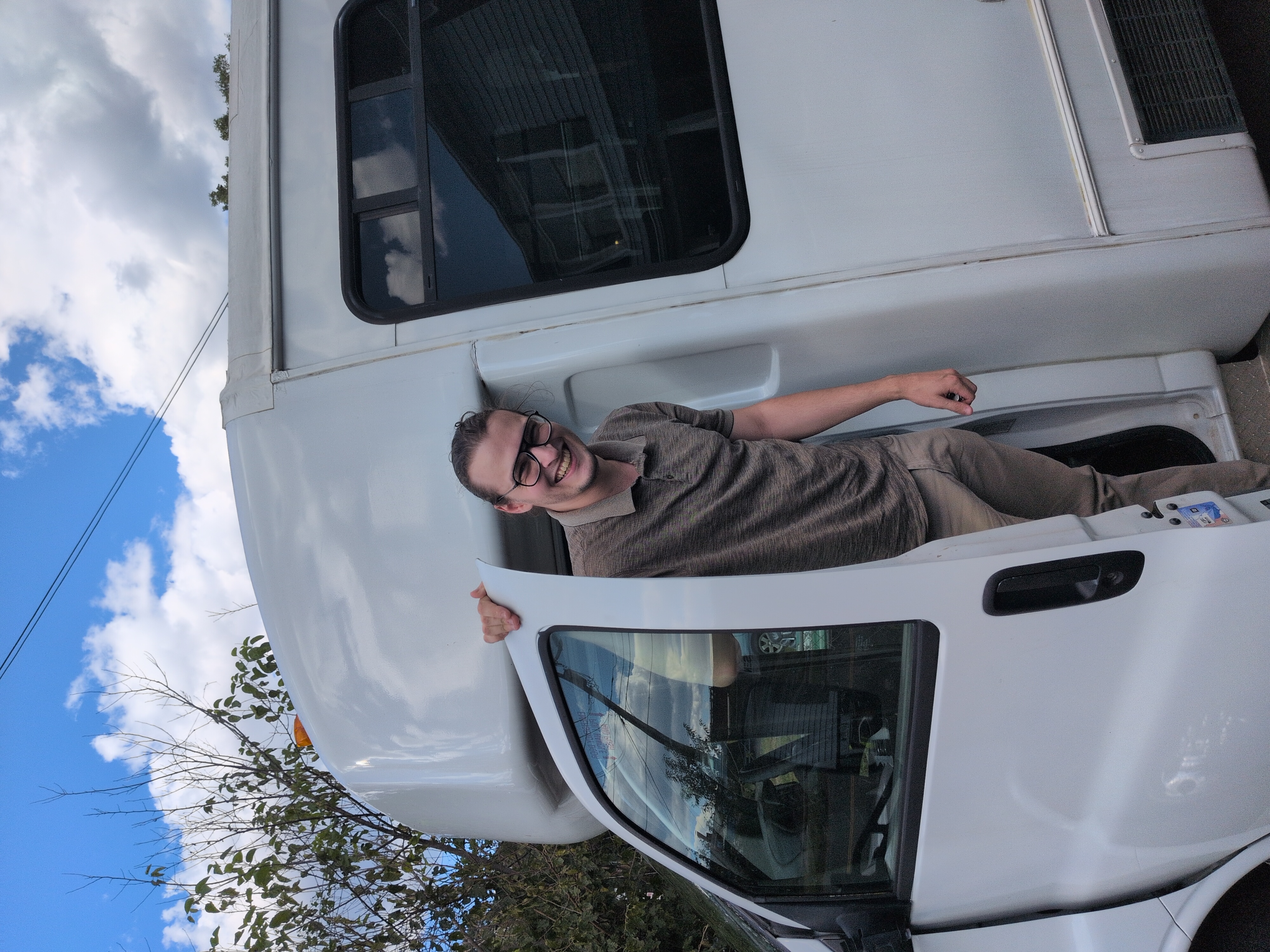
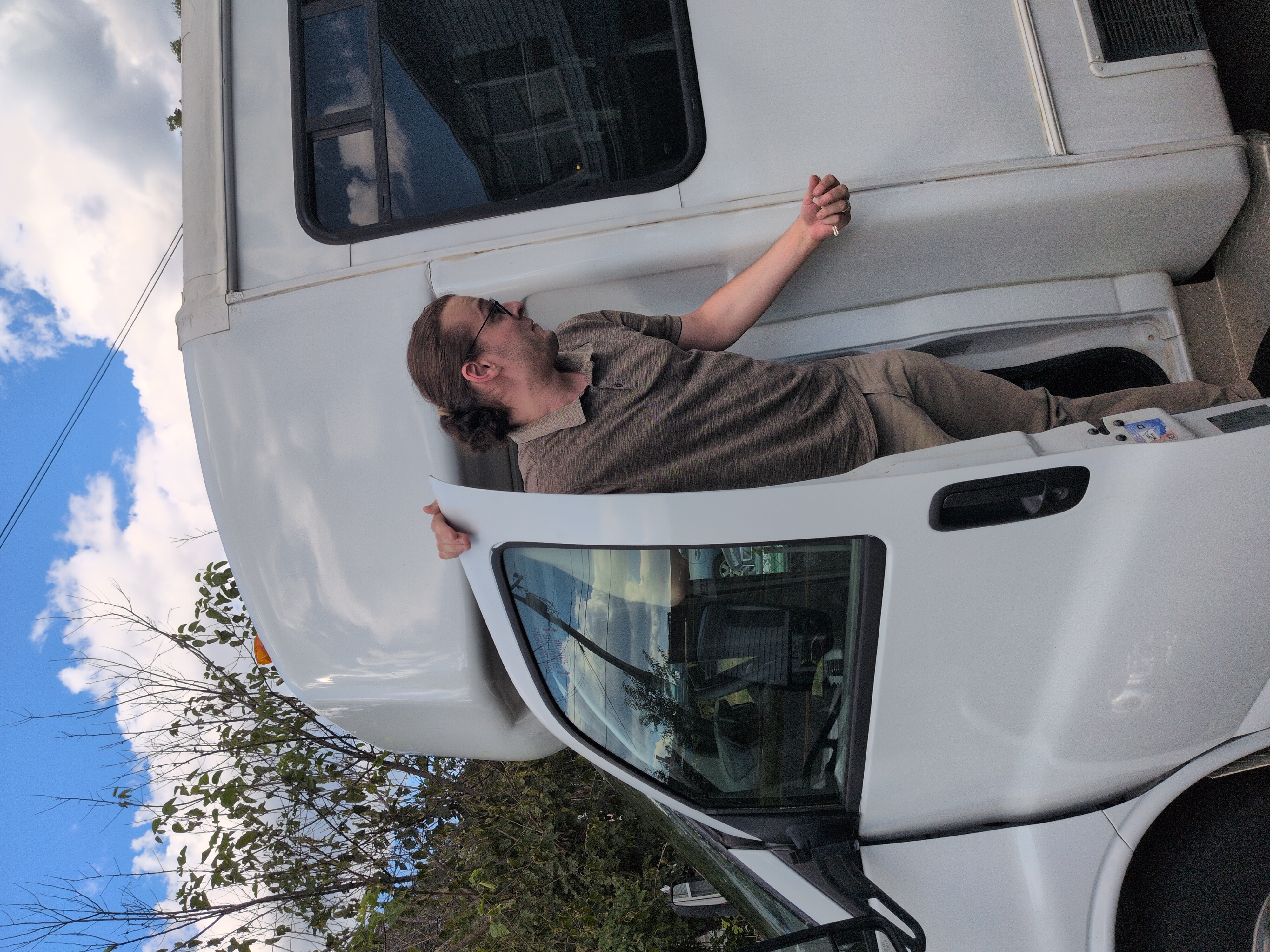
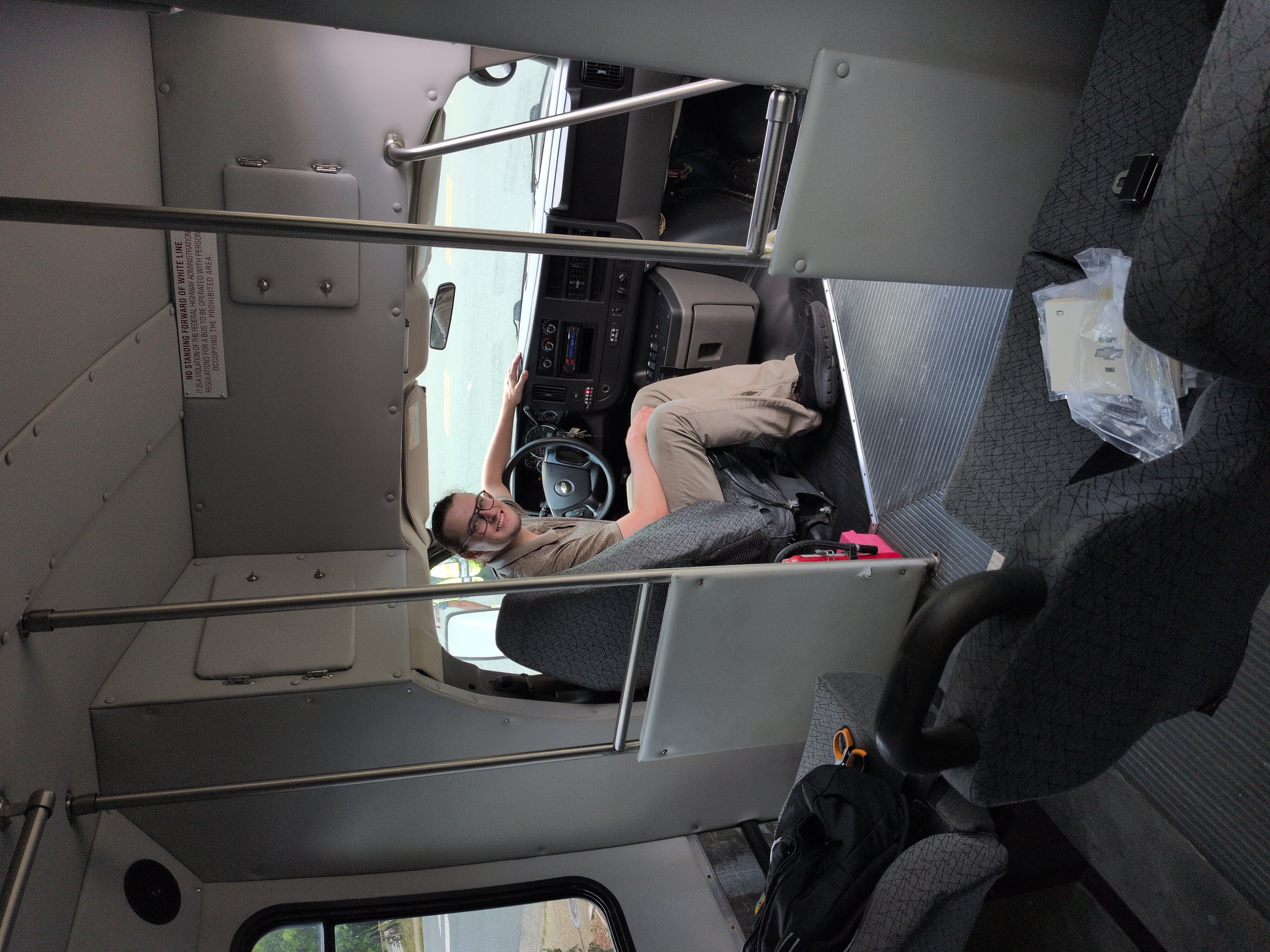
The bus came up on GovDeals — a government surplus auction site where municipalities, schools, and public agencies offload fleet vehicles. This one had spent its life as a community center shuttle before the center downsized and listed it. A 2018 Chevy Express 3500 on a cutaway chassis, fourteen seats, clean drivetrain.
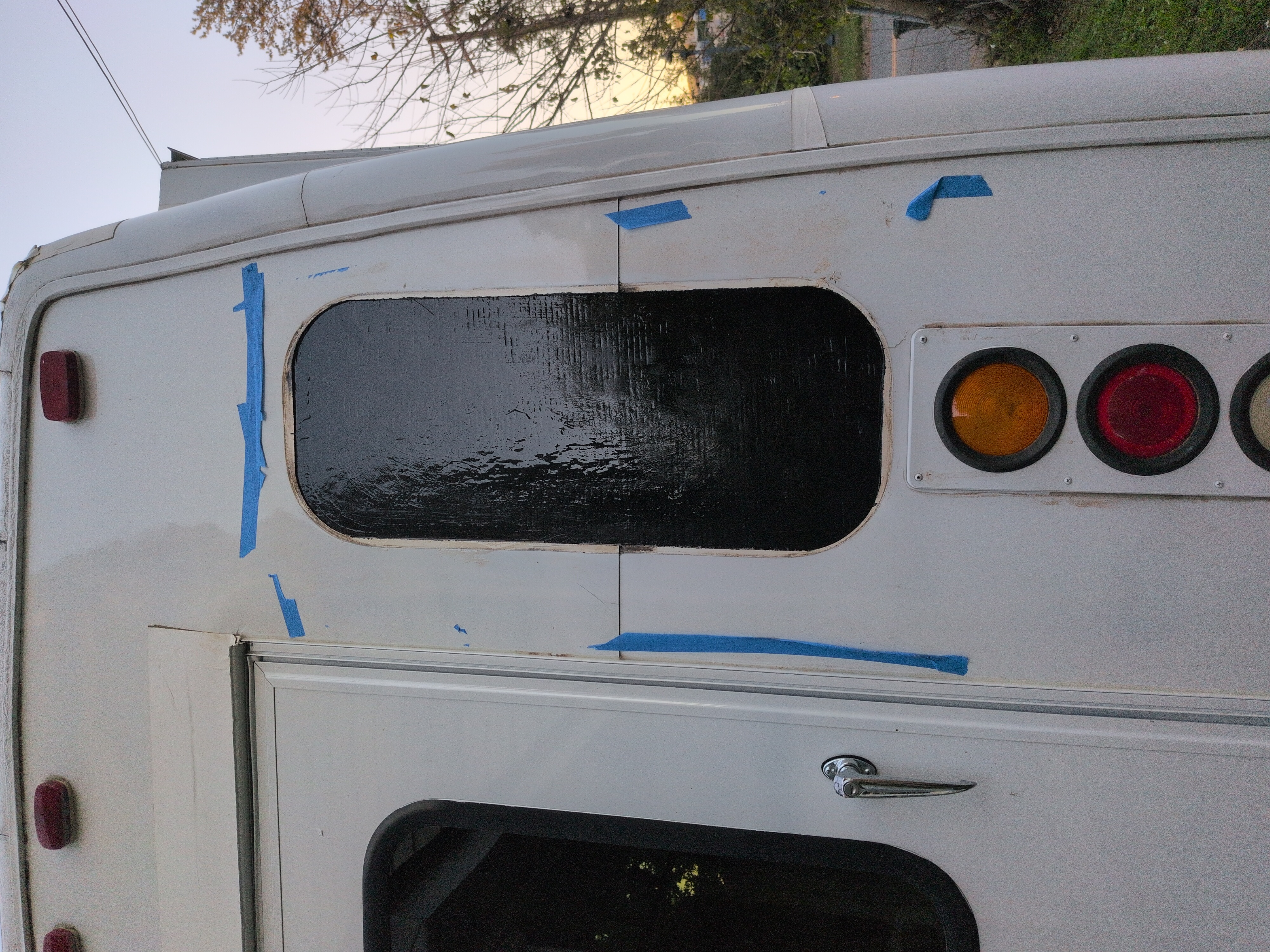
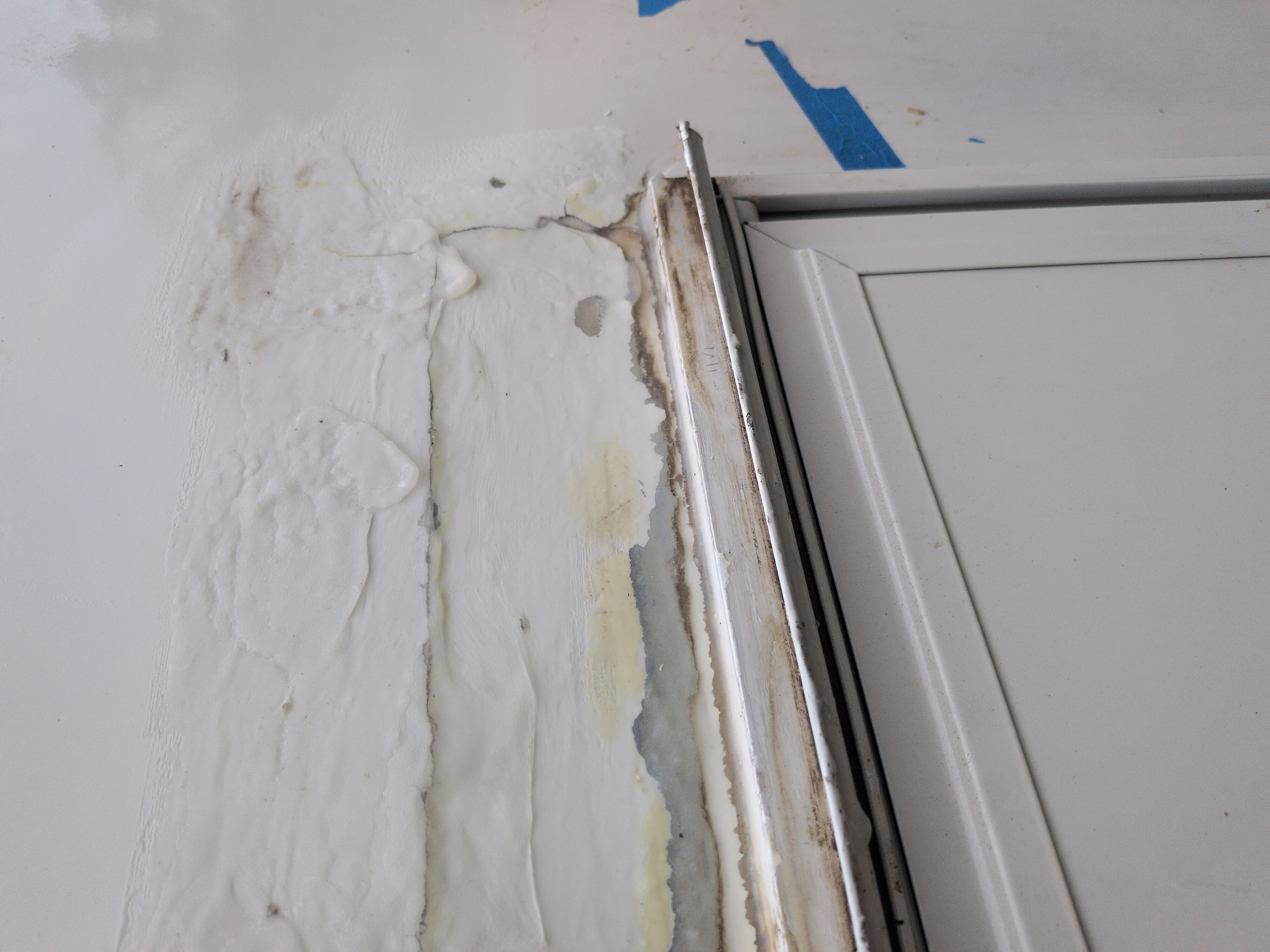
Government auctions are worth watching for conversion vehicles. Fleet units are maintained on schedule and the service history is often documented. This one had some water intrusion at the rear wall — visible in the listing photos if you knew what to look for — but the chassis and mechanicals were solid. The water damage was a negotiating point, not a dealbreaker.
The Strip-Down
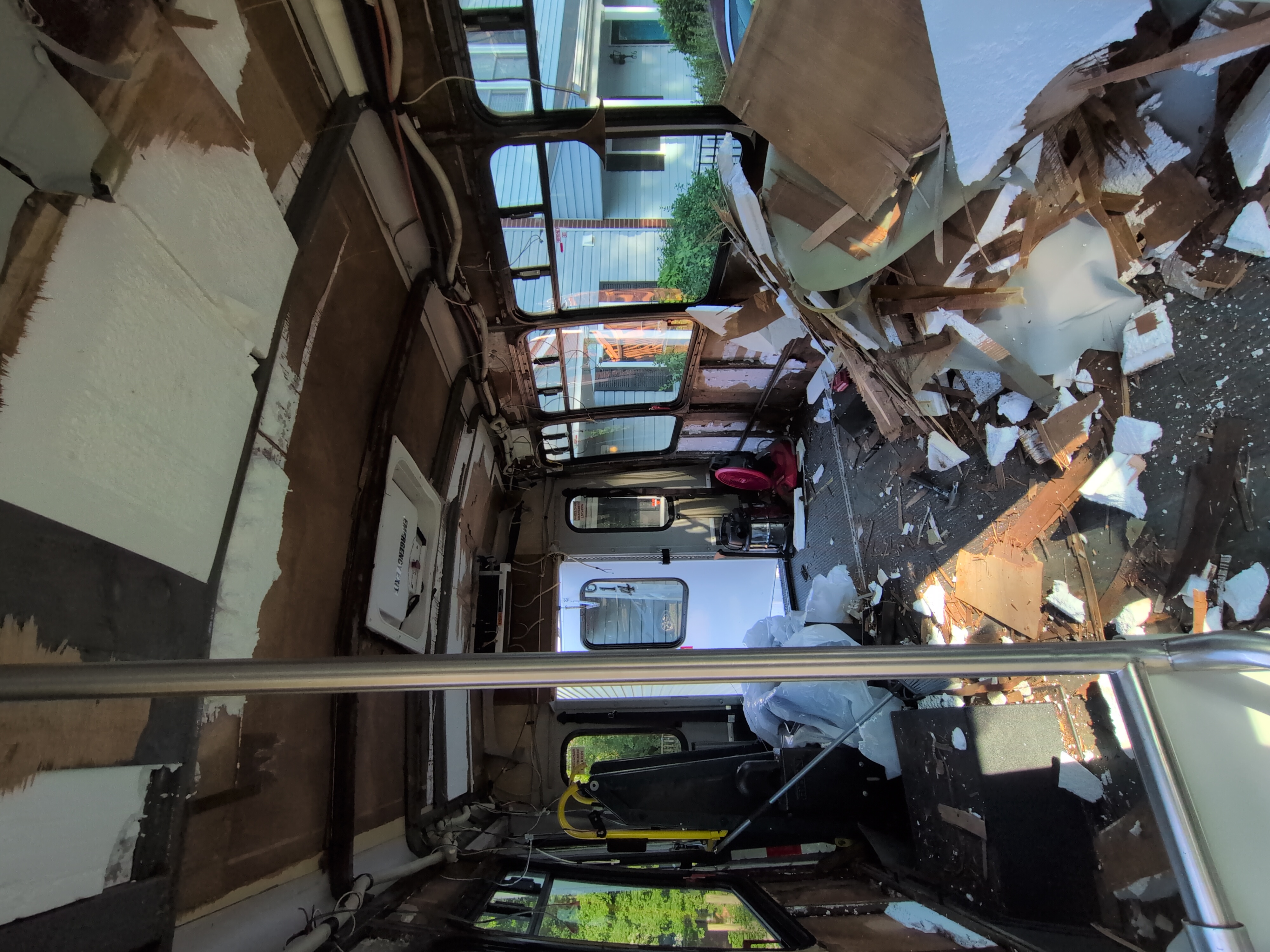
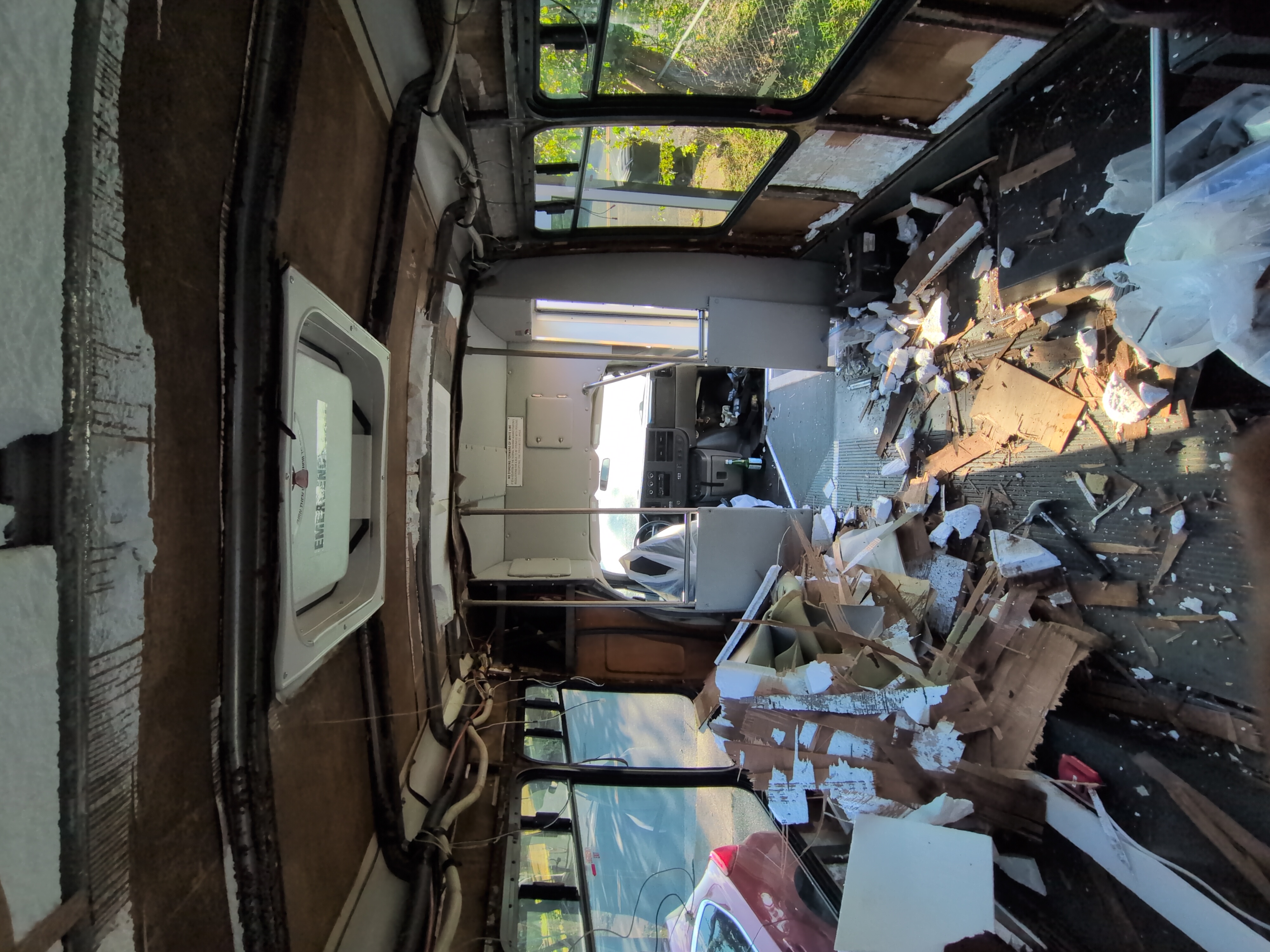
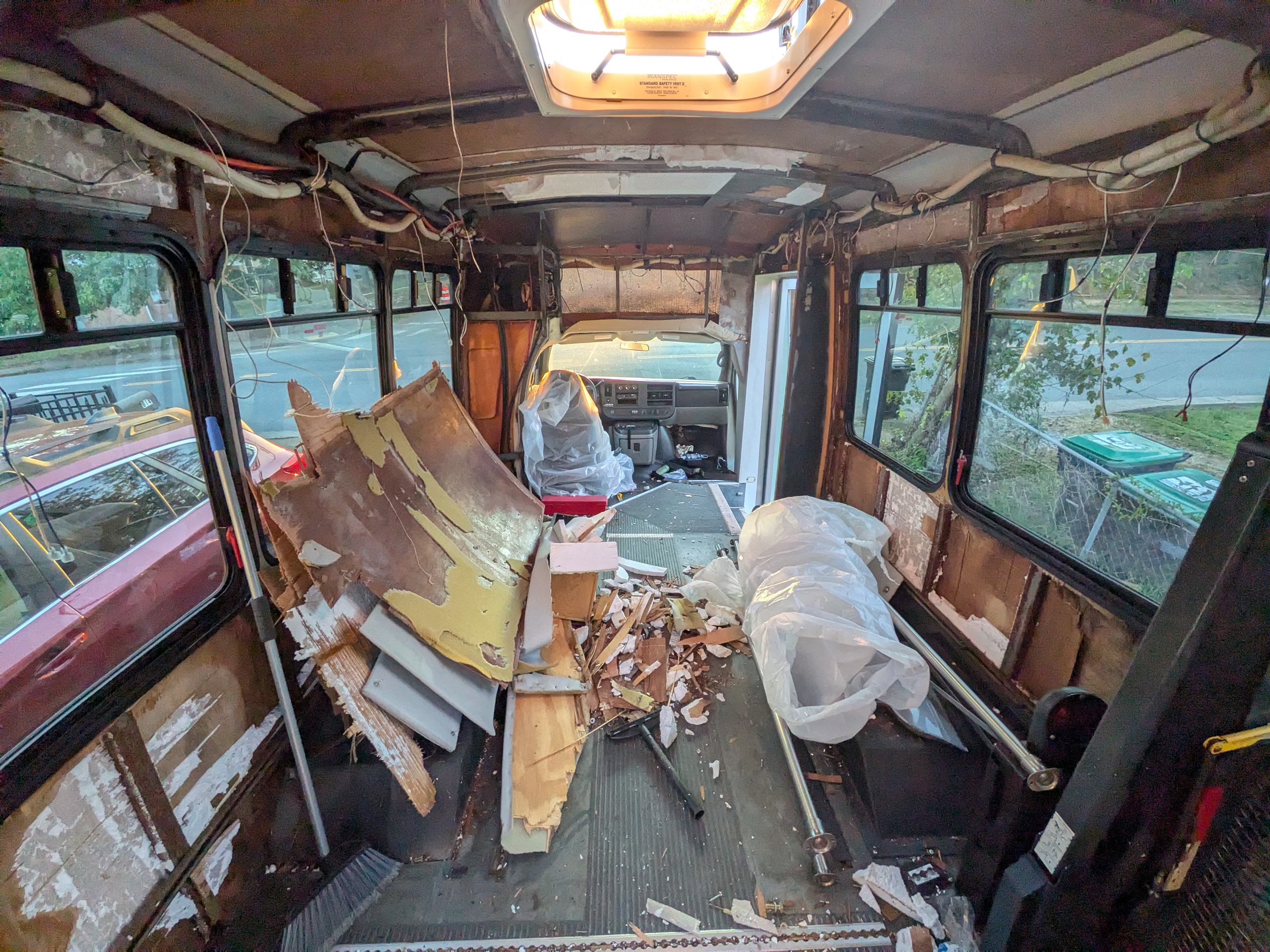
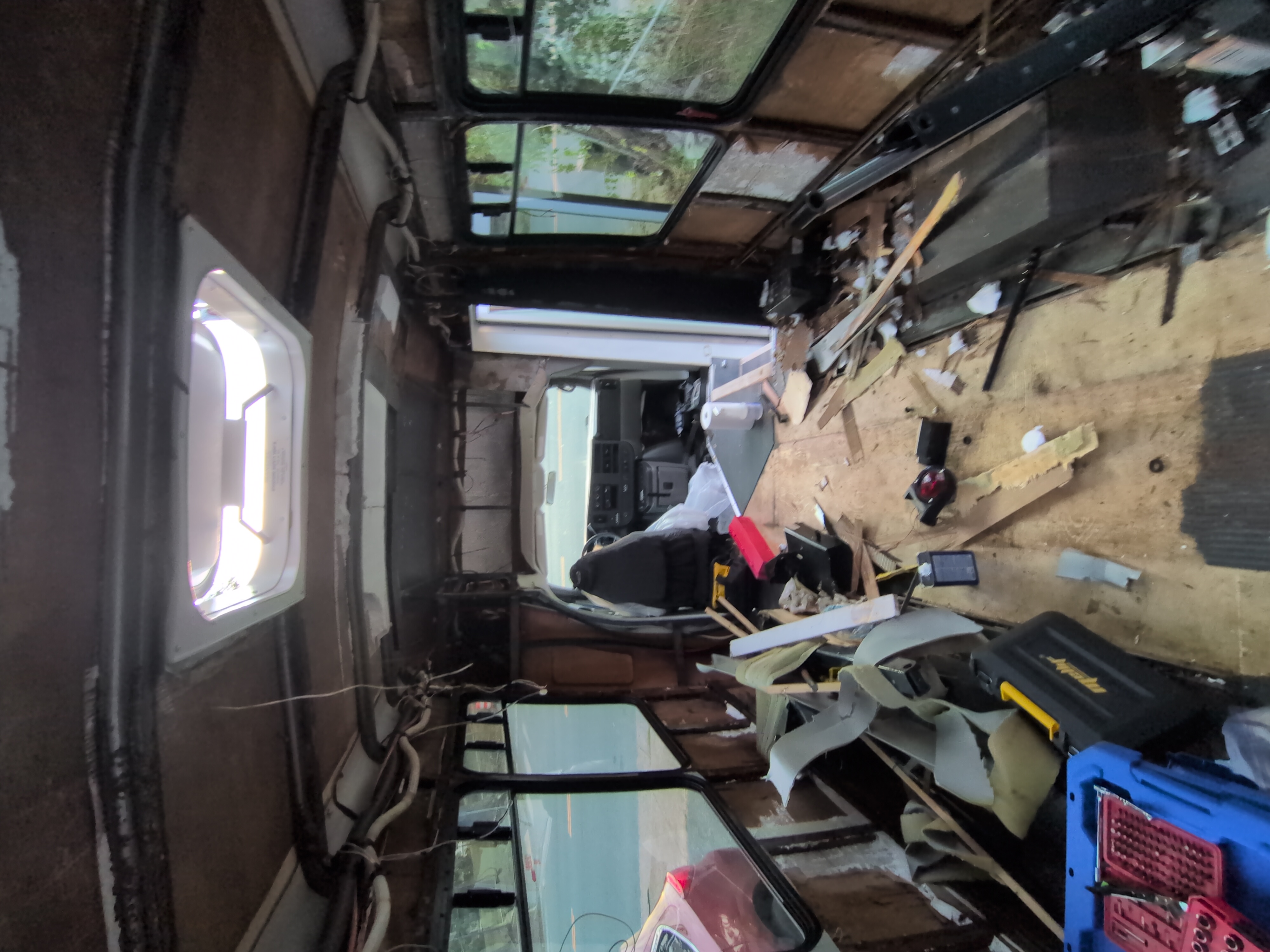
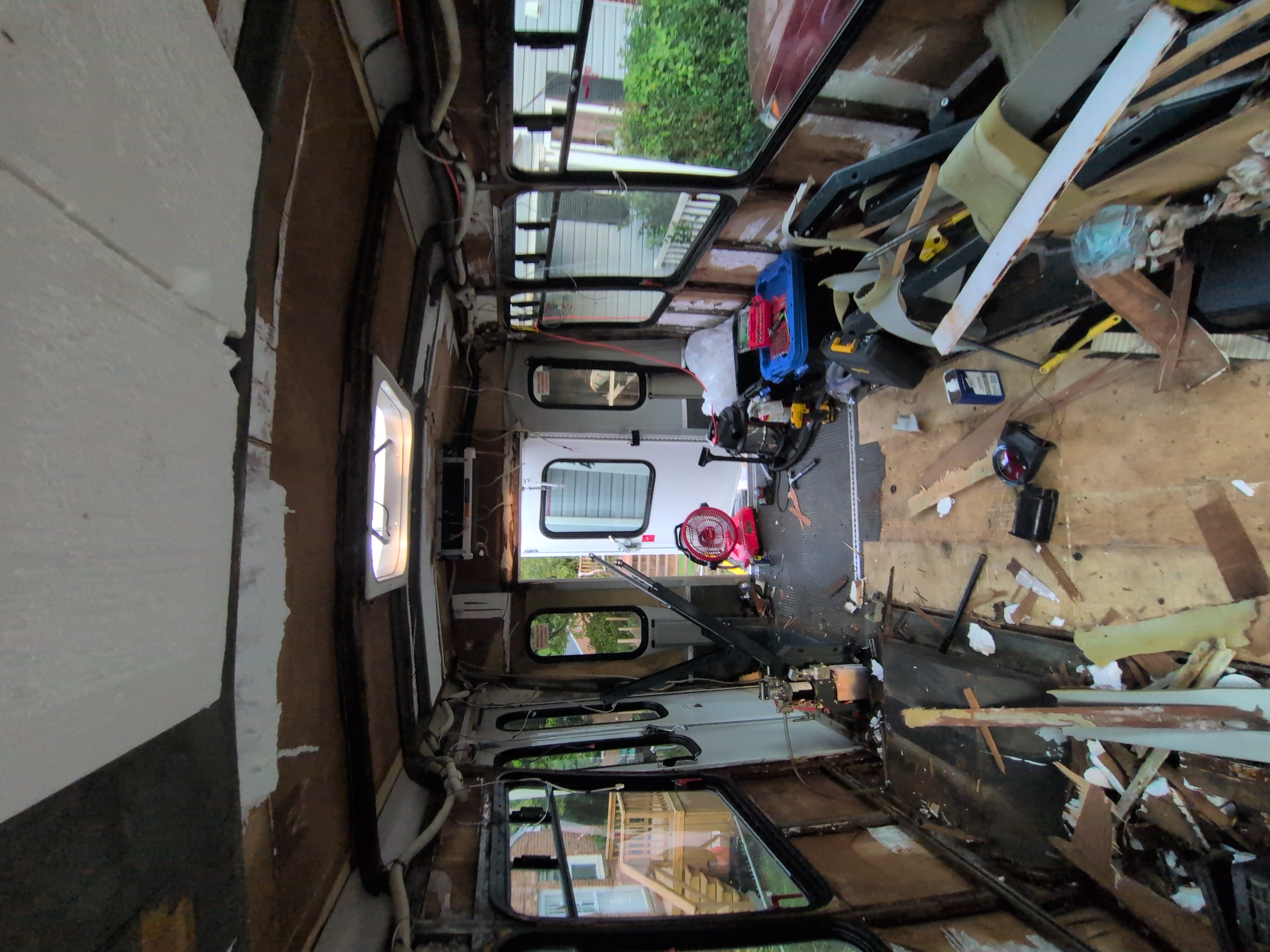
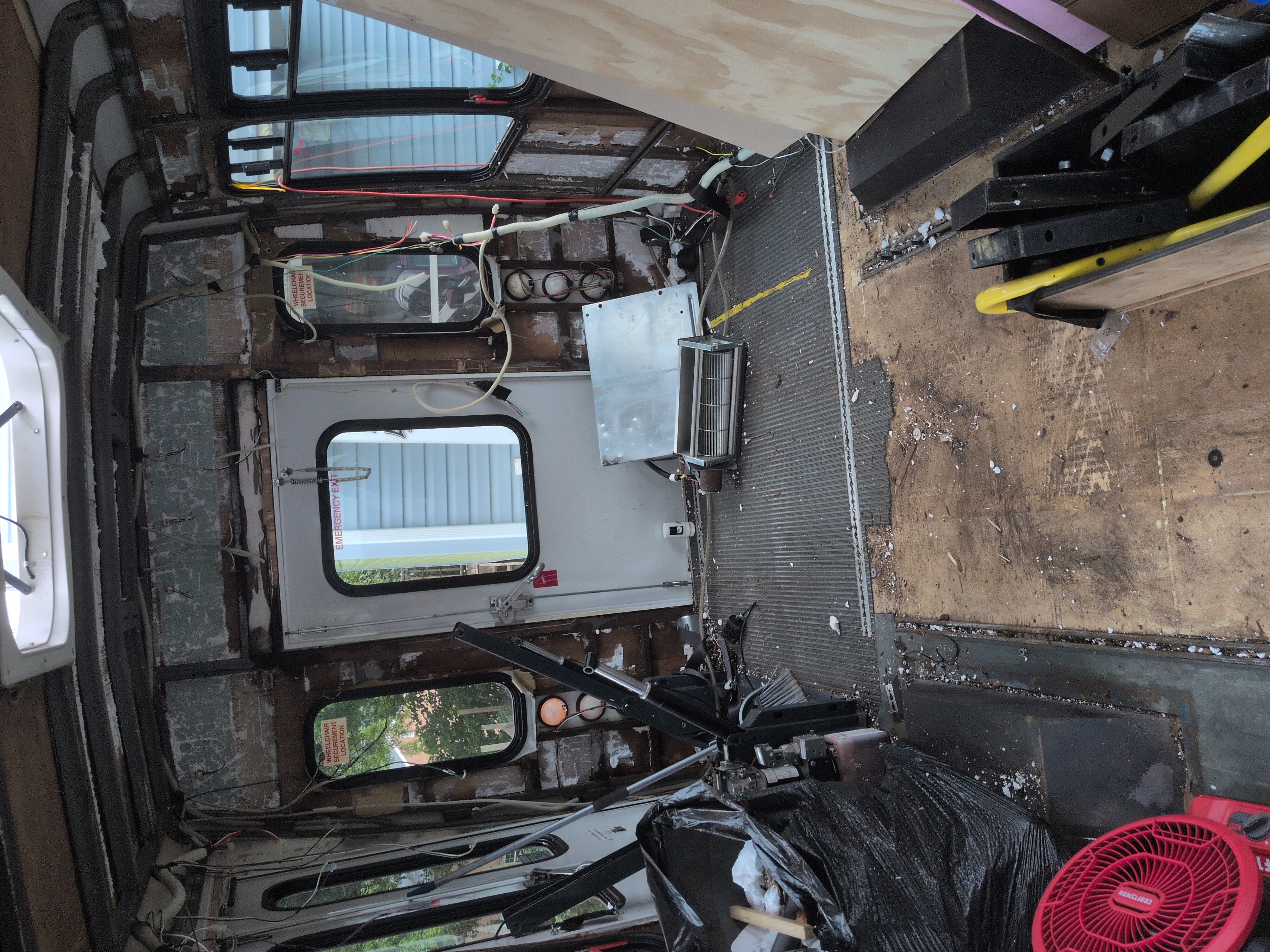
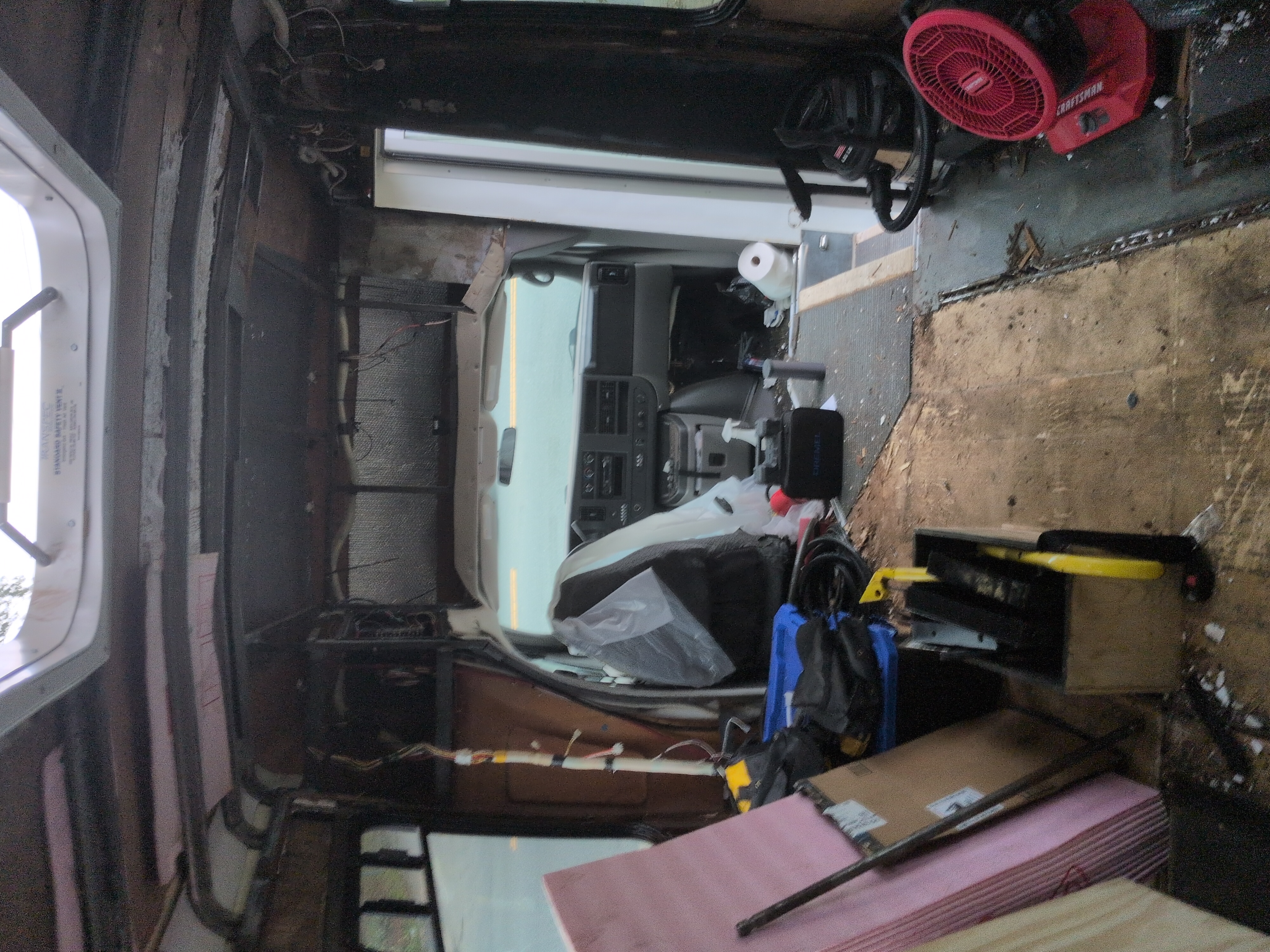
The first task was clearing everything non-structural: all fourteen passenger seats, the ceiling headliner, sidewall panels, original flooring, and most of the factory wiring harness. This exposed the bare metal ribs of the body and made the scope of the water damage clear.
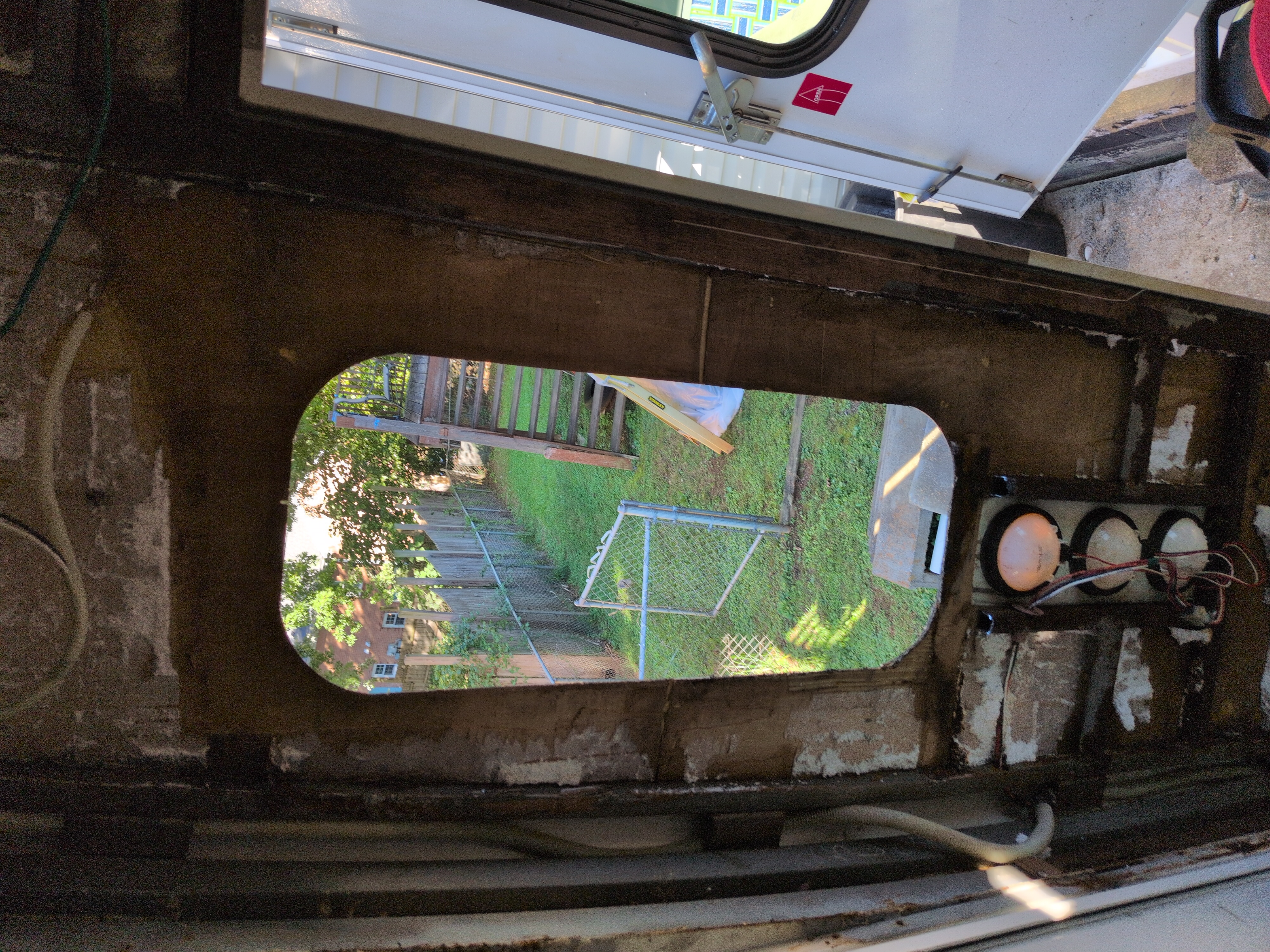
Water had entered through the rear wall seam and worked behind the lower sidewall panels, soaking the original foam insulation and rotting a section of the plywood subfloor beneath it. The damage was contained to the rear quarter — structural ribs unaffected. All compromised material came out; exposed metal surfaces were cleaned and treated before anything new went back in.
Seal Everything
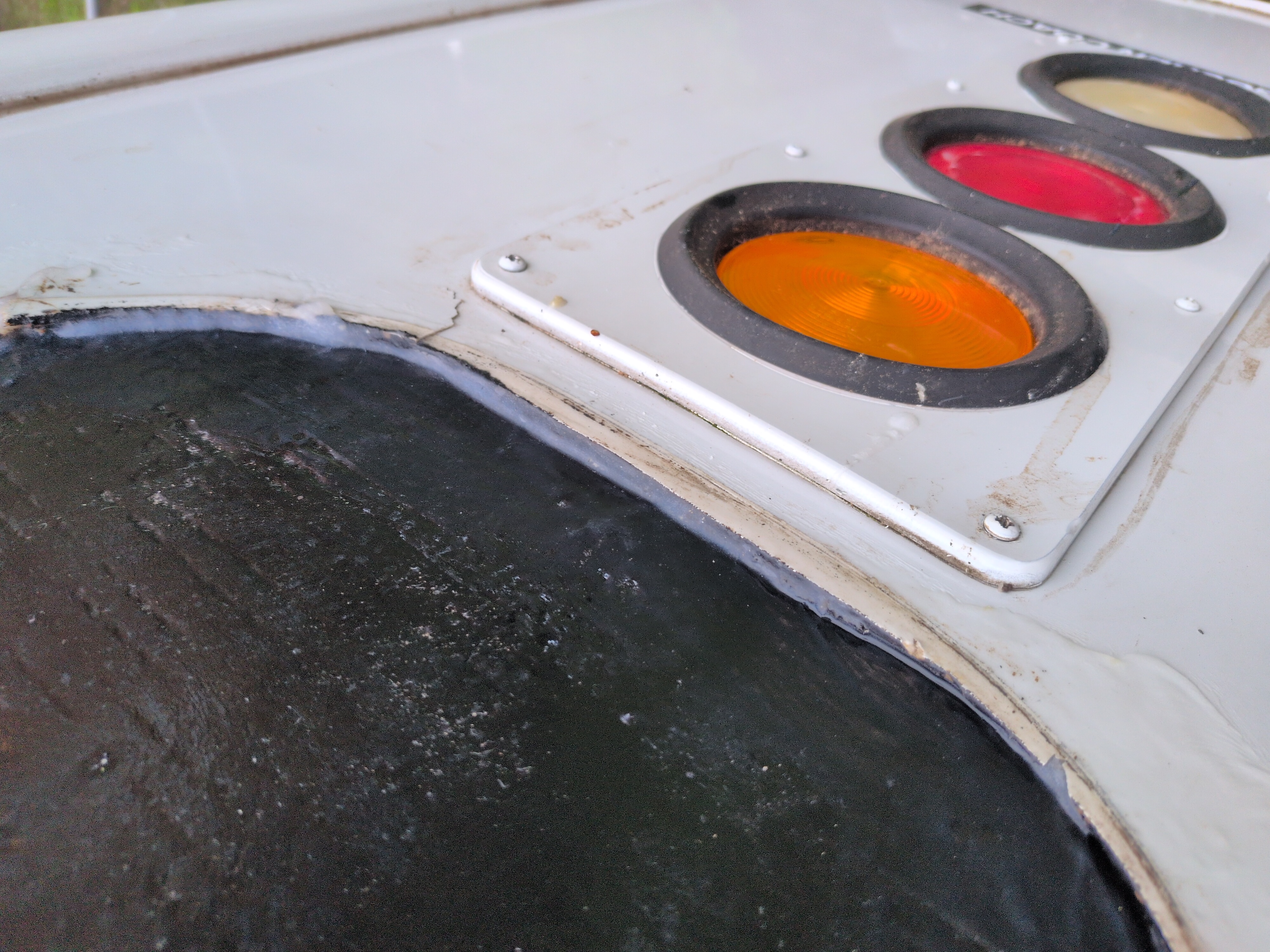
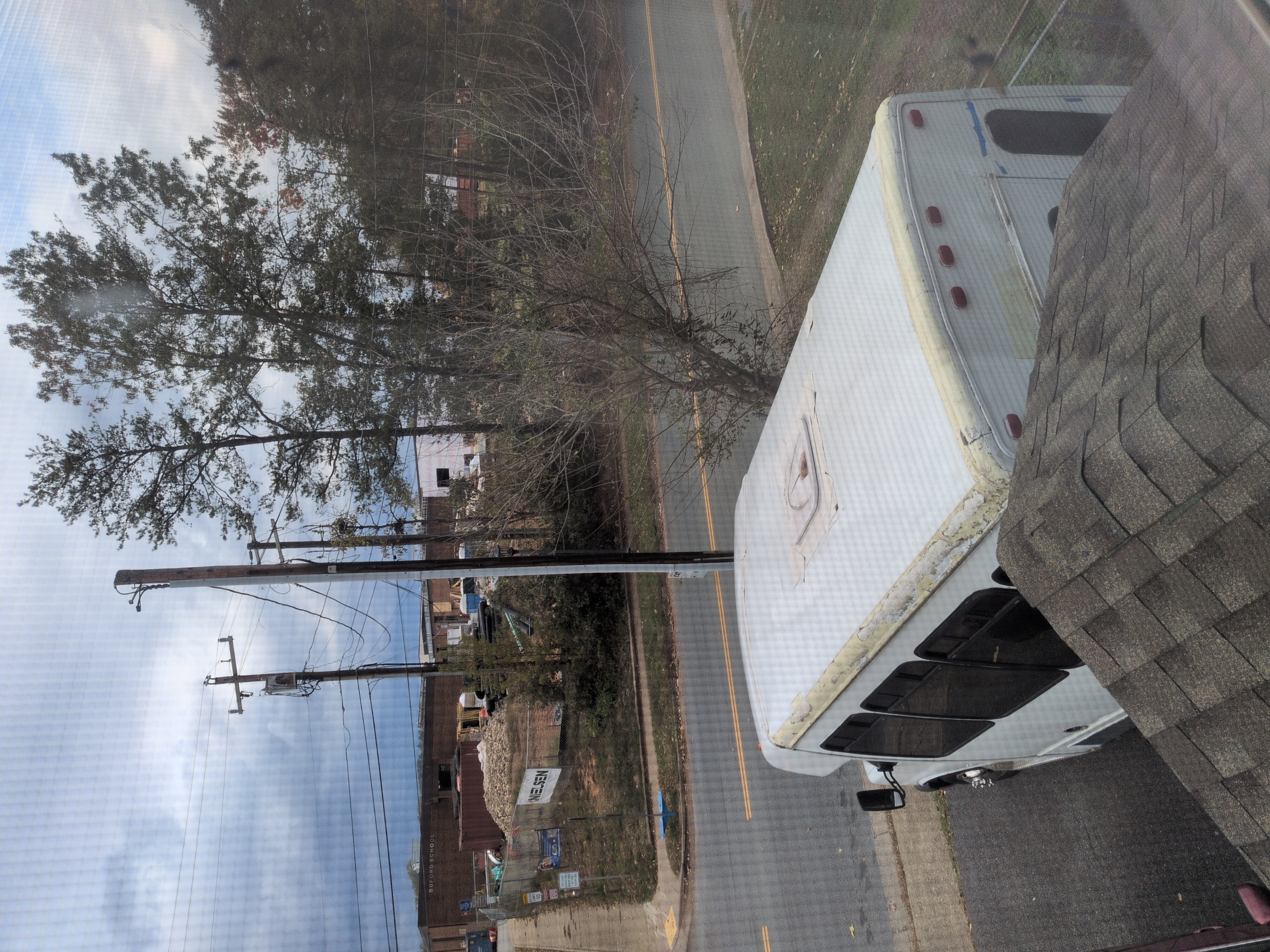
Before anything new goes in, the exterior has to be watertight. The rear window that had allowed water ingress was sealed permanently — glass removed, frame cleaned back to bare metal, opening filled with a layered butyl and EPDM system. All remaining window frames were resealed with fresh butyl tape where the factory compound had aged out.
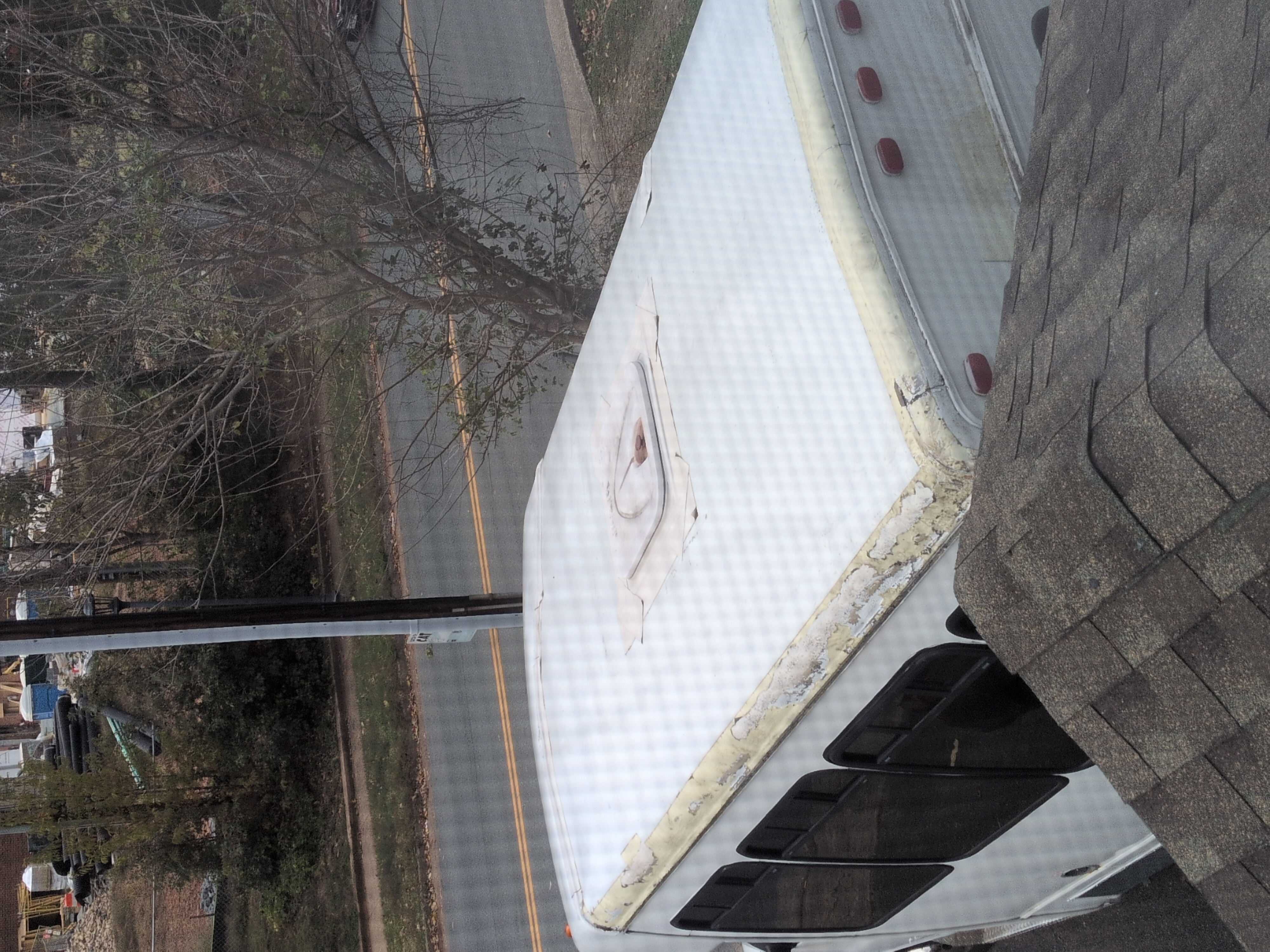
The roof was inspected from above and found structurally sound but showing UV oxidation and minor crazing in the factory coating. Dicor self-leveling lap sealant was applied over all roof seams and penetrations. The four existing roof vents were pulled, reseated on new butyl, and reinstalled.
Subfloor
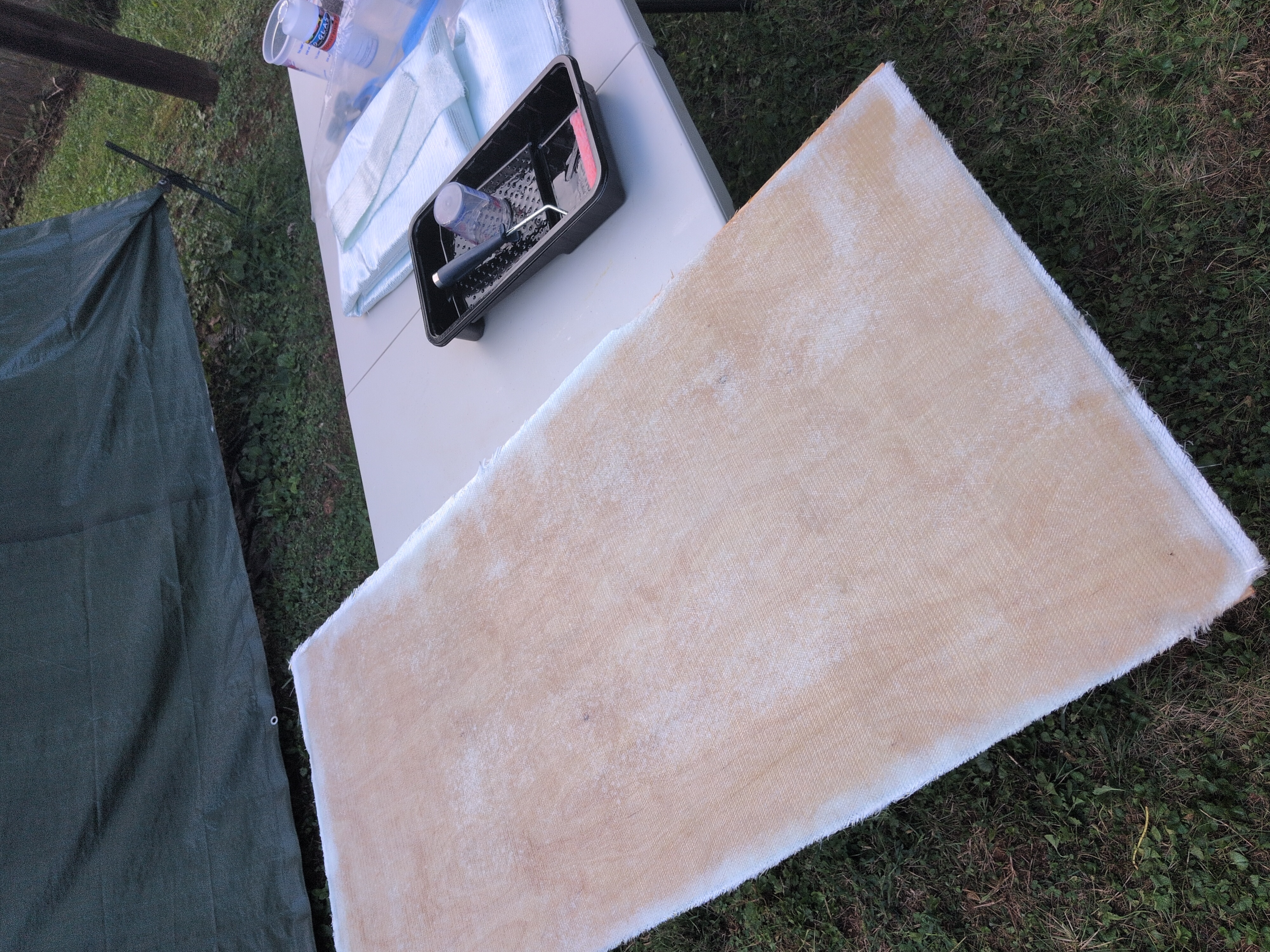
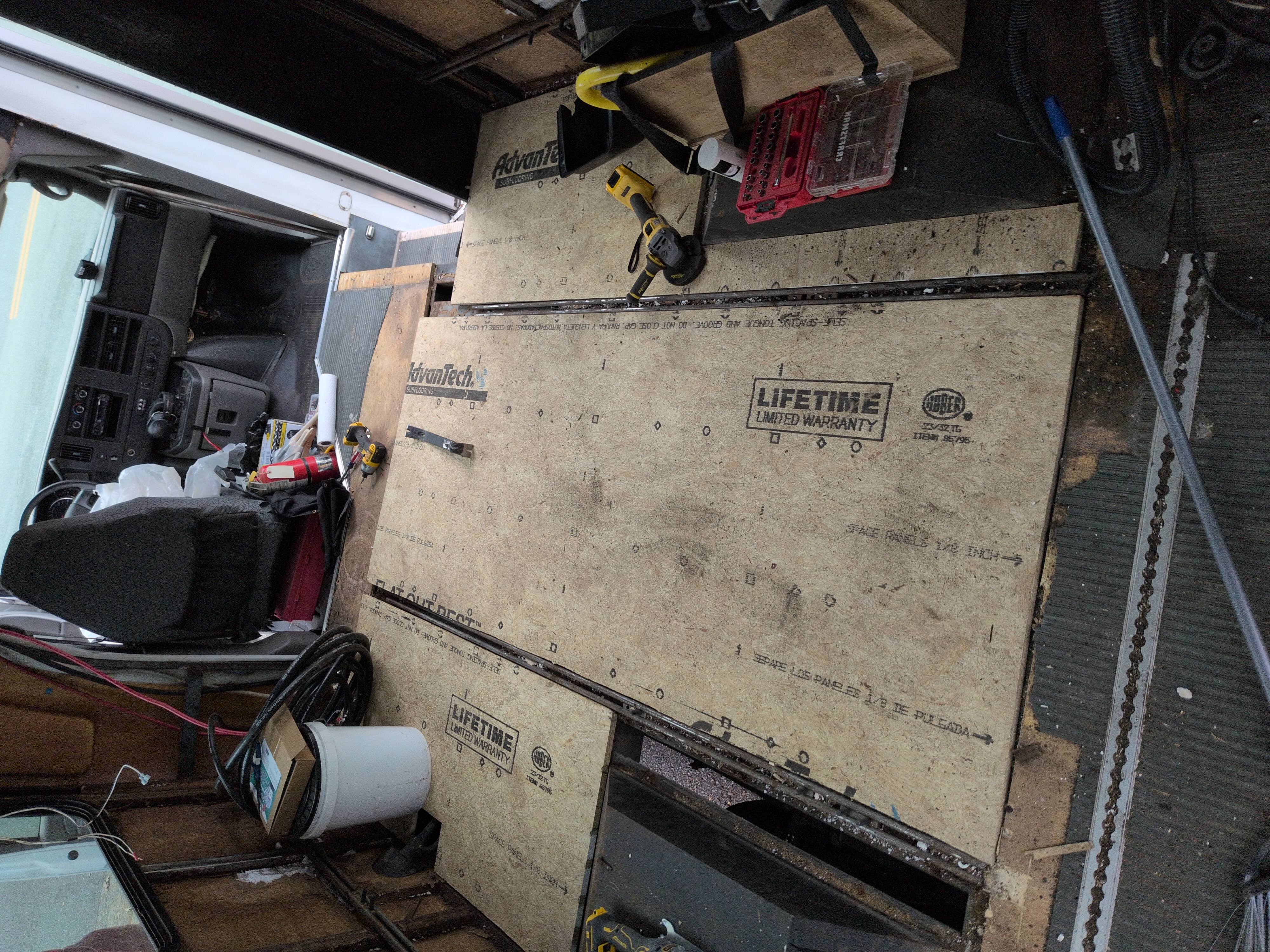
With the interior sealed and the metal substrate treated, the first construction step was laying a new subfloor. AdvanTech panels — a high-density engineered flooring board with a moisture-resistant binder — were cut to fit the factory floor ribs and glued down. The result is a flat, rigid working surface across the full length of the cabin that won't move or squeak and won't fail if moisture finds it again.
Floor Plan
The cabin runs roughly eleven feet from the cab divider to the rear wall — enough for a complete living and working space without compromising on any one zone. The layout divides into three areas:
- Rear — Sleeping — A fixed queen platform spanning the full interior width, raised eighteen inches for under-bed storage. A privacy curtain on a track separates it from the rest of the cabin when closed.
- Mid — Kitchen & Seating — Driver side: a compact galley with a stainless steel sink, 12V compressor refrigerator, and a two-burner induction cooktop. Passenger side: a bench dinette with a fold-flat table that seats two or converts to an extra sleeping surface for guests.
- Forward — Office — A standing-height desk built against the cab divider with monitor arm and wall-mounted cable management. The goal is a workstation that actually functions as one, not a surface to balance a laptop on.
Sanitation is a composting toilet in a small enclosed cabinet near the entry door — no black tank, no dump station. A rear-bumper mounted outdoor shower pulls from the fresh water system for a rinse after a hike.
Power
The electrical design targets full off-grid self-sufficiency for multiple days of typical use — laptop, external monitor, lighting, refrigerator, water pump, and device charging — without engine run time or a campground hookup. The core components:
- 600W Solar Array — Three 200W rigid monocrystalline panels mounted flat on the roof, wired in series-parallel to the charge controller. Sized to fully recharge the bank within a reasonable window even under partial cloud cover.
- 300Ah LiFePO4 Battery Bank — Two 150Ah lithium iron phosphate batteries in parallel at 12V, giving roughly 3.6kWh of usable capacity at 80% depth of discharge. LiFePO4 was chosen for its thermal stability, flat discharge curve, and ten-year-plus cycle life.
- Victron SmartSolar MPPT 100/30 — Charge controller handling solar-to-battery conversion with Bluetooth monitoring via the VictronConnect app.
- Victron Phoenix 2000W Inverter — Pure sine wave output for AC loads. Handles the induction cooktop in short bursts and runs office equipment without issue.
- 30A Shore Power Inlet — For campground hookups or driveway charging when solar isn't sufficient. A DC-DC converter also tops up the house bank from the alternator while underway.
All circuits run through a Blue Sea fuse block with labeled breakers. A Victron BMV-712 battery monitor tracks state of charge, voltage, and current draw in real time.
Starlink
The core motivation for this project was a space to live and work from without putting work on hold. That requires real internet. A Starlink flat-panel antenna will be roof-mounted on a low-profile tilt bracket, with the router and power supply in a vented cabinet inside. The flat-panel draws 50–75W in normal operation — well within what the solar system can sustain indefinitely.
The goal isn't to find cell signal in a parking lot. It's to park somewhere genuinely remote — a national forest road, a high desert flat, a mountain pull-off — and still close a pull request.